
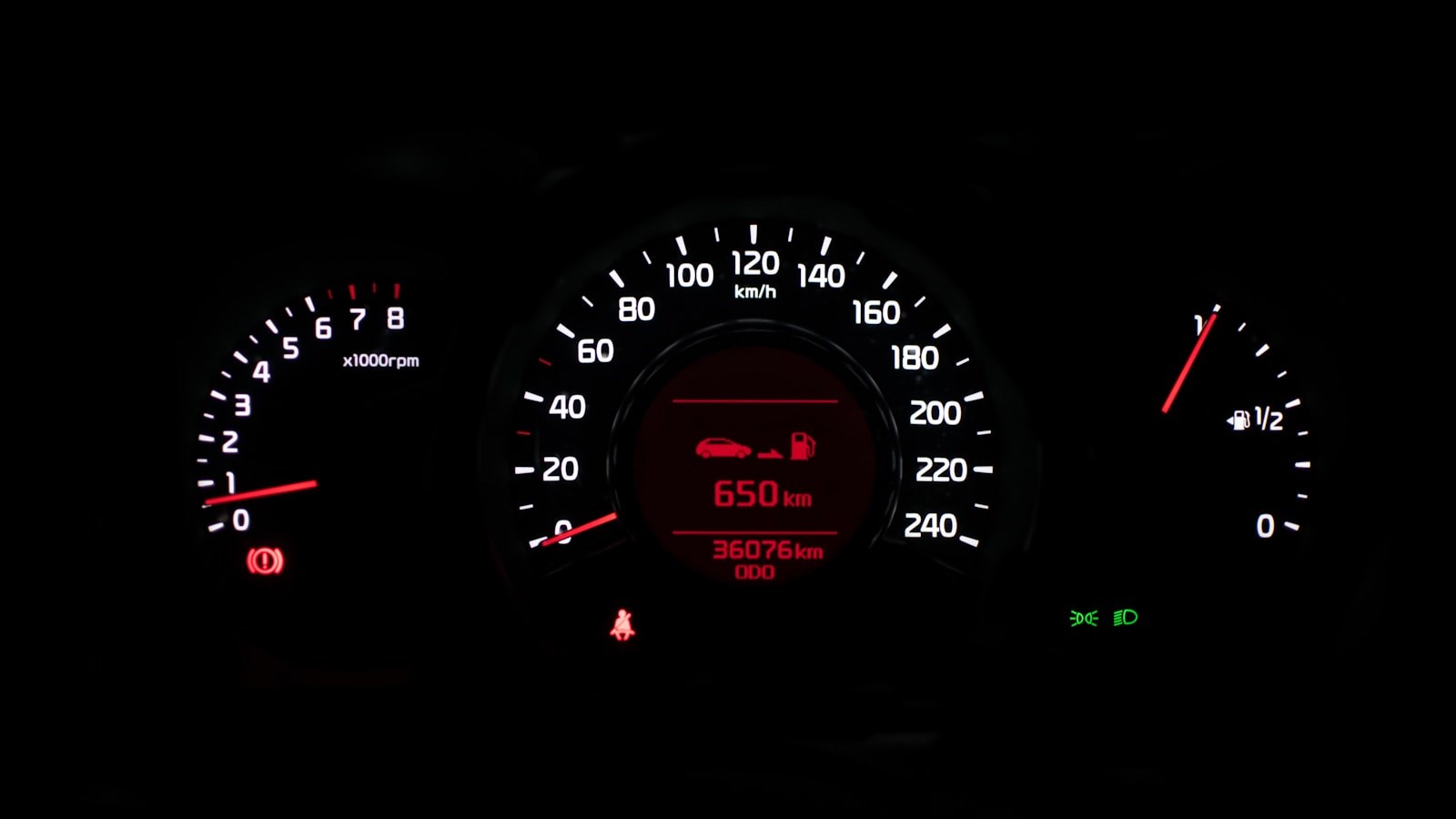
The light is on. Now find out why, before paying for parts.
Drivability diagnostics with current scan tools, done by ASE Master Certified technicians who explain the fault in plain language. The code is the starting point; the cause is what you pay to fix. Call to book, or walk in and wait your turn; if the light is flashing, call first.
The one thing to check before anything else
A stored fault, not an emergency
The engine computer has logged something out of range: an oxygen sensor, an evaporative leak (often a loose gas cap), a catalytic converter reading, a small misfire. The car is usually fine to drive to the shop. Ignoring it for months is what turns a sensor into a converter.
An active misfire
A flashing check-engine light means unburned fuel is reaching the exhaust, and that can overheat and ruin the catalytic converter quickly. It is one of the most expensive parts on the car. Ease off, stop safely, and call (301) 444-4410 before driving it any distance.
Read the code. Then prove the cause.
Every car built since 1996 has an OBD-II port that hands over the fault codes. Reading them takes a minute; that part is easy. A code such as “P0420” does not say “replace the catalytic converter”; it says the converter is reading below threshold, which can be the converter, a sensor, an exhaust leak or a misfire upstream.
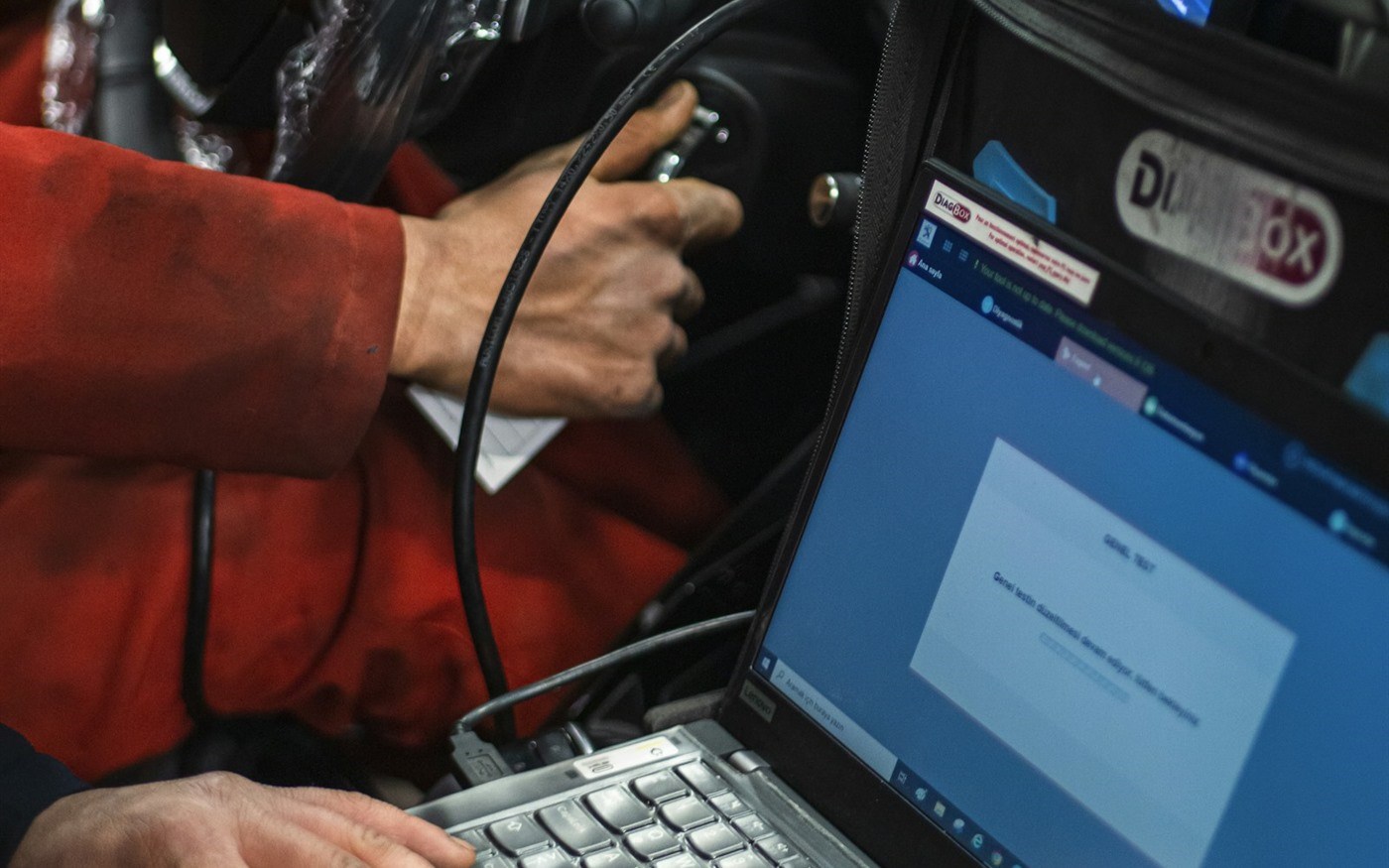
So the technician tests the actual system: live sensor data, fuel trims, a smoke test for leaks, a compression or coil test for a misfire. The result is a cause, a price, and an explanation in English, Spanish or French, all before any part is ordered. If the fix is a gas cap, you hear that too.
The shop invests in current computer diagnostics precisely because newer cars are more software than steel, and a guess is the most expensive tool in the box.
Failed the Maryland VEIP test? This is where it gets fixed.
Maryland runs its emissions test itself, at state VEIP stations and self-service kiosks, not at repair shops. Most vehicles registered in Montgomery County are tested every two years once they are 72 months past their model year, and the county’s staffed stations are the ones the MVA calls “Rockville” (in Derwood) and “Silver Spring” (in White Oak). What a repair shop does is the other half: when the car fails, or the check-engine light guarantees it will, the emissions system gets diagnosed and repaired here so it passes the retest. The first retest is free, and a car that still cannot pass after at least $450 of qualifying emissions repairs may be eligible for a state repair waiver for that cycle.
Check-engine light on
With OBD-II testing, a lit check-engine light is itself a reason to fail. Clearing the code without fixing the cause does not work: the monitors have to complete. We fix the cause, then confirm the readiness monitors are set.
Emissions system repairs
Oxygen sensors, catalytic converters, EGR and evaporative (EVAP) system faults, purge valves, gas caps and the wiring that connects them. The shop has offered emissions-system diagnosis and repair since 2008.
Drivability problems
Rough idle, hesitation, stalling, poor fuel economy, hard starts: the symptoms that usually sit behind an emissions fail. Diagnosed with data, not by swapping parts.
Not sure whether you need the safety inspection or the emissions test? The difference, explained.
Three check-engine myths, corrected
“The parts store read the code, so I know what’s wrong.”A code is a symptom, not a diagnosis. The same P0420 has at least four common causes, and the cheapest is not always the one the counter suggests. Reading is free; testing is what saves the money.“If I disconnect the battery the light goes away.”It does, along with the readiness monitors the VEIP test needs to see. The light comes back when the fault recurs, and the car is not ready to pass emissions until it has been driven enough to reset them.“It’s been on for a year and the car drives fine.”Some faults are harmless. Others slowly wreck the catalytic converter or hide a second problem the light cannot show you because it is already on. A read is quick, so find out which kind you have: call to book, or walk in and wait your turn.