
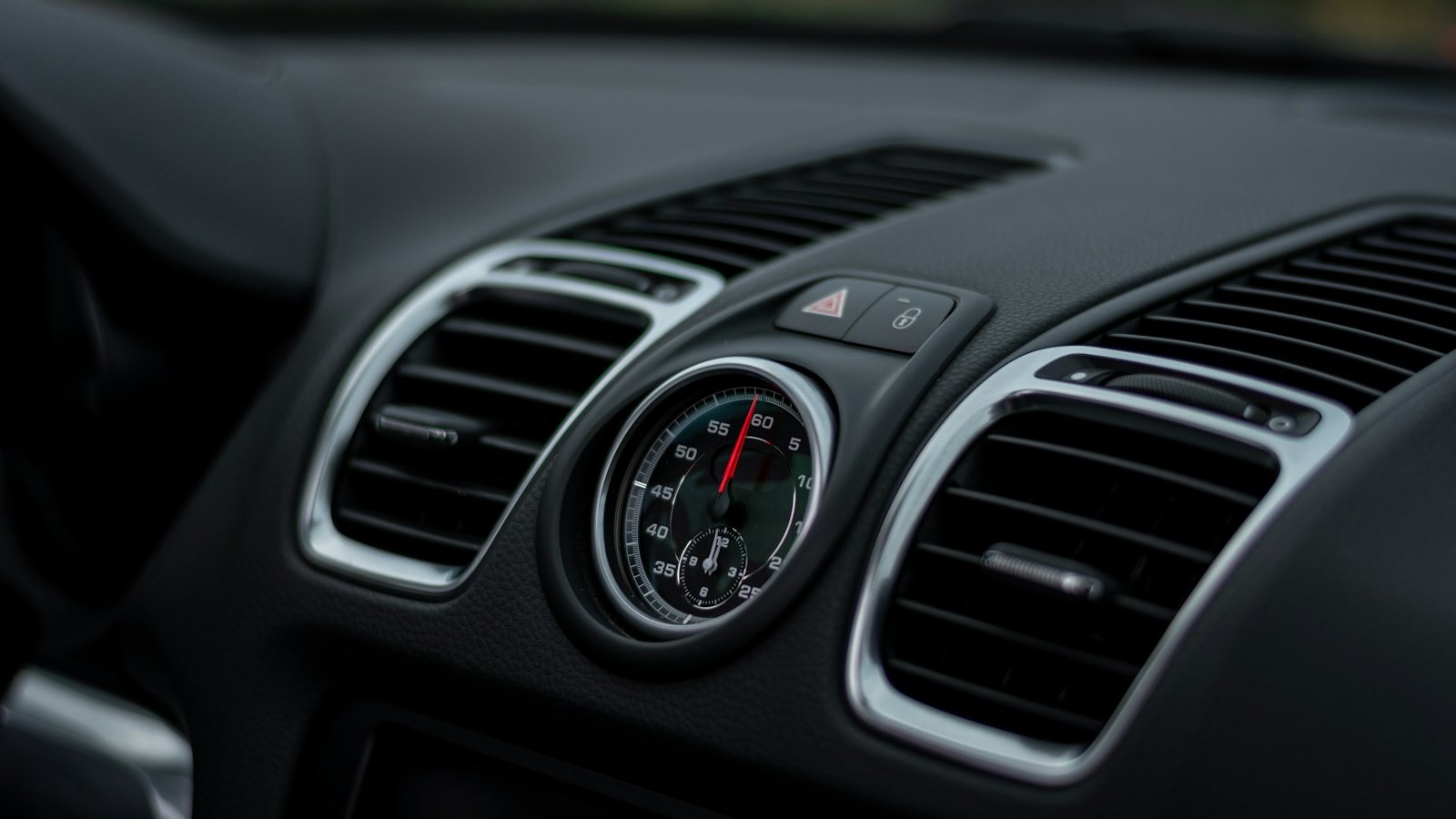
Cold air in July. A steady needle in traffic.
Two systems, one page: the air conditioning that keeps you comfortable and the cooling system that keeps the engine alive. Recharges, leak repair, radiators, hoses, thermostats and water pumps. Call to book, or walk in and wait your turn; if the gauge is already climbing, call first.
One keeps you cool. The other keeps the engine cool.
People lump them together because both involve a radiator up front, but they are separate systems with separate failures.
Air conditioning
Warm air from the vents is nearly always low refrigerant, and refrigerant does not get used up, it leaks out. A recharge alone treats the symptom for a season.
- Pressure test and performance check
- Leak detection before any recharge
- Recharge with the refrigerant your car specifies
- Compressor, condenser and hose repair
- Cabin air filter and blower problems
- Musty smell from the vents
Engine cooling
Coolant carries heat from the engine to the radiator. A leak, a stuck thermostat or a tired water pump and the temperature gauge starts climbing, the one warning you should never drive through.
- Radiator repair and replacement
- Hoses, clamps and the radiator cap
- Thermostats and cooling fans
- Water pumps and drive belts
- Coolant flush and refill
- Pressure test to find a leak you cannot see
If the gauge is in the red, stop
An engine that overheats once and is shut off promptly is usually a radiator, a hose or a thermostat. An engine that is driven overheating for ten more minutes can be a warped head or a blown head gasket, a repair that costs many times more. Pull over, switch off, and let it cool before doing anything else.
A sweet smell, a puddle of green, orange or pink liquid under the car, a heater that suddenly blows cold, or white steam from the hood are all the cooling system asking for help. Call and we will tell you whether it is safe to drive the last few blocks to the shop.
- Open the radiator cap while the engine is hot: the system is pressurized and scalding.
- Top off with plain water and forget about it. It dilutes the coolant and the leak is still there.
- Keep driving “just to get home” with the needle in the red.
A/C and cooling questions from the counter
Why did last year’s recharge only last a few months?
Because the refrigerant left the same way it did the first time. A sealed A/C system does not consume refrigerant; if it is low, there is a leak: a seal, an O-ring, a corroded condenser. We look for the leak before recharging so you are not back next summer.
Which refrigerant does my car use?
Older cars generally use R-134a; many newer ones use R-1234yf, which is not interchangeable. The correct type is on a label under the hood, and we charge to the amount the manufacturer specifies rather than “until it feels cold.”
My heater blows cold in winter. Is that the A/C?
Usually the opposite: the heater uses engine coolant, so no heat often means low coolant, a stuck thermostat or a blocked heater core. It is a cooling-system symptom, and it is worth checking before the temperature gauge tells you the same thing the hard way.