
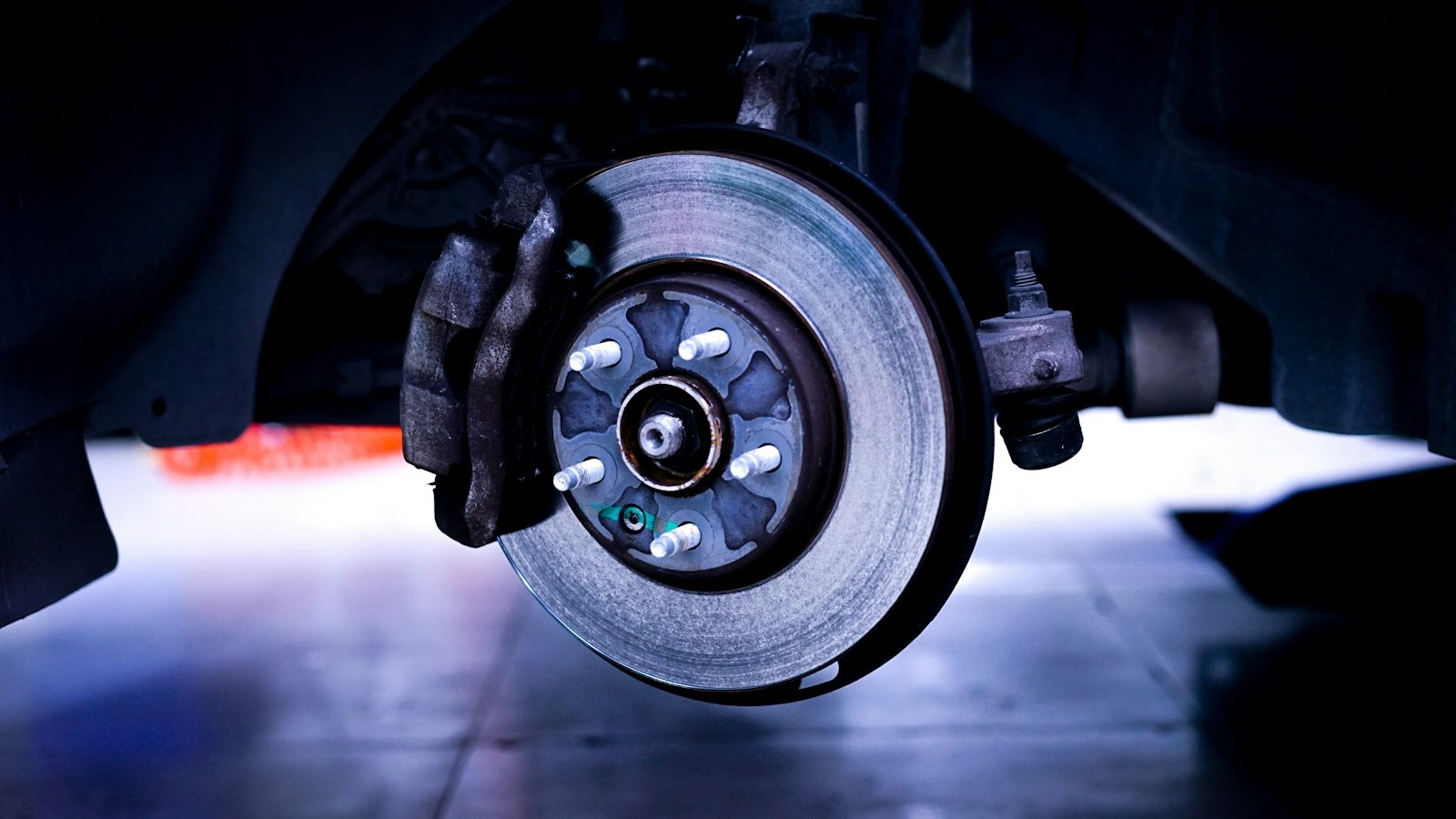
The part of the car that has to work every single time
Pads, rotors, calipers, brake fluid, ABS, shocks and struts: inspected honestly, quoted before the work, and often done the same day. Call ahead to book; it is faster. Walk-ins are welcome if you have time to wait your turn. If the pedal feels wrong, call first either way.
Three noises, three levels of urgency
Brakes give you notice. The trick is knowing which notice is polite and which one is the last one.
High squeal
Usually the built-in wear indicator: a small metal tab that sings when the pad is near the end. Not dangerous today, but the rotor is next in line if you leave it.
Grinding
Metal on metal: the pad material is gone and the backing plate is chewing the rotor. Every mile adds to the bill. If you can, stop driving it and call.
Pulsing pedal
A shudder through the pedal or the wheel when you brake from speed usually means the rotors are no longer true. Sometimes they can be machined; often they are replaced.
A soft, sinking or long pedal is different from all three: that is a hydraulic problem (fluid, a line or a master cylinder) and the car should not be driven far. Call (301) 444-4410 and we will tell you whether it is safe to bring in.
We check the whole system, not just the loud part
A squeal on the front does not mean the rear is fine. Before quoting, the technician looks at every corner and tells you what can wait.
- Pads and shoesMeasured, not eyeballed. You hear the remaining thickness in millimeters.
- Rotors and drumsChecked for thickness, scoring and warping. Machined where it is safe, replaced where it is not.
- Calipers and hardwareA sticking caliper wears one pad to nothing and cooks the rotor. Slides, pins and clips get cleaned or replaced.
- Brake fluidFluid absorbs moisture over time and the pedal goes soft. Level, condition and leaks, every time.
- Lines and hosesRubber hoses crack with age; a bulging hose is a failure waiting for a hard stop.
- ABSIf the ABS light is on, the fault is read with the scan tool: often a wheel-speed sensor, sometimes wiring.
The other half of stopping
Worn shocks and struts are not just a comfort issue. When the suspension cannot keep the tire pressed to the road, braking and handling suffer, the nose dives under braking, and the car wanders in crosswinds. The tell-tale signs: a clunk over bumps, a bounce that keeps going after a dip, tires cupping on one edge, or a strut leaking oil down its body.
Struts are replaced in pairs, and because a strut is part of the steering geometry on most cars, the job finishes with a wheel alignment so the new parts sit where the manufacturer meant them to.
Control arms, ball joints, tie-rod ends and bushings are inspected at the same time. A loose one is often the real source of a “brake” noise.
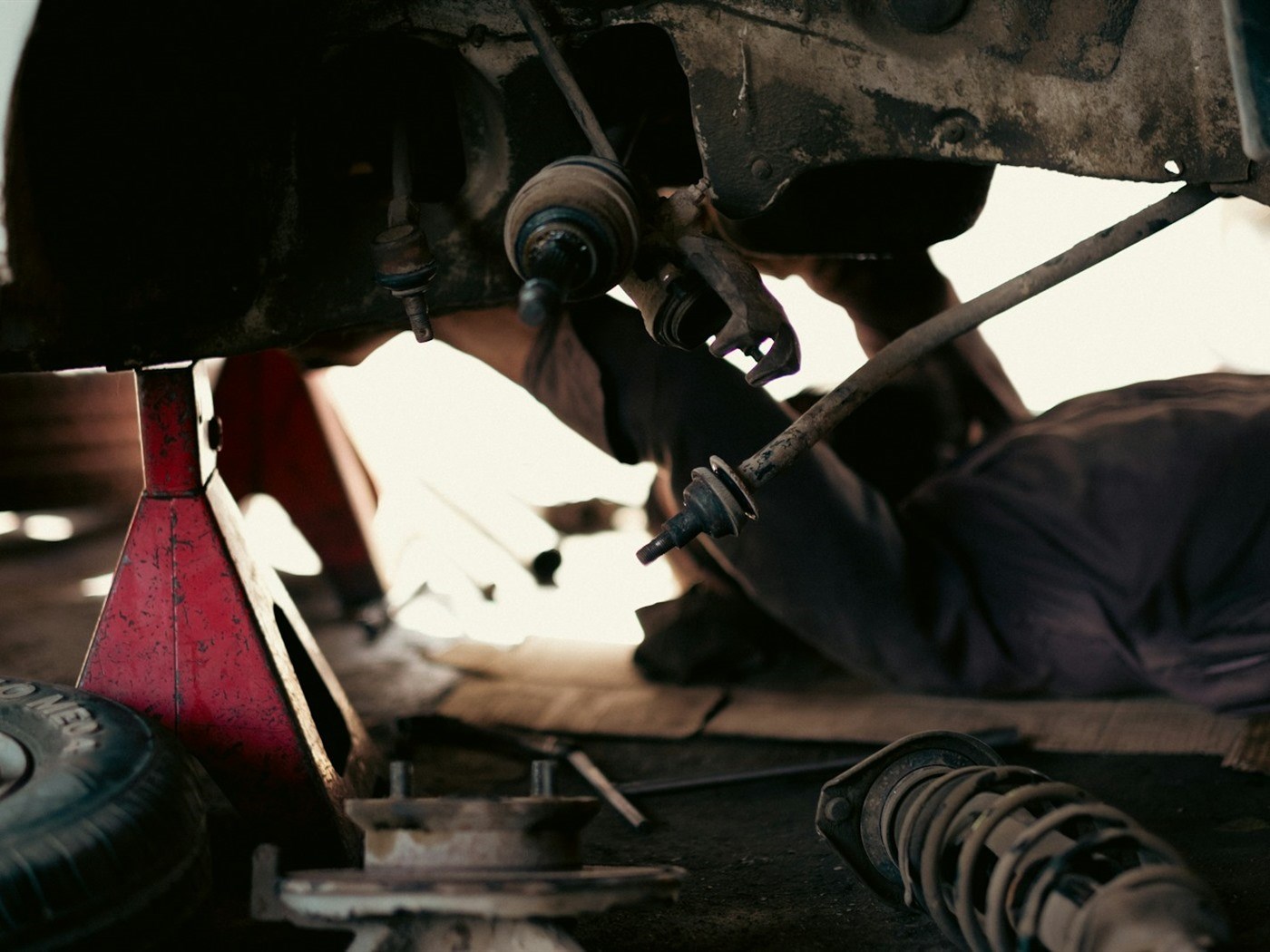
Often in and out the same day
Call to book, or walk in
Appointments are recommended for the fastest service: call (301) 444-4410 to book. Walk-ins are welcome if you have time and a little patience, and a quick call first will tell you whether there is room right now. Mention the noise, when it happens and which corner it seems to come from.
Inspection on the lift
Wheels off, everything measured. ABS faults read with the scan tool.
Your call
A clear quote for what needs doing now and what can wait. Nothing is replaced until you approve it.
Road test and pickup
New brakes are bedded in and road tested before you get the keys back. Often that is the same day, parts permitting.
Brake questions from the counter
How long do brake pads last?
It depends far more on how and where you drive than on the car. Stop-and-go commuting on Rockville Pike or the Beltway wears pads much faster than highway miles. Rather than guess, have them measured at each oil change. It takes two minutes and you get the number.
Do I have to replace the rotors with the pads?
Not always. If the rotors are thick enough and true, new pads alone are fine. If they are scored, warped or under the minimum thickness stamped on them, they are replaced, and you will be shown why.
Will worn brakes fail a Maryland State Inspection?
Brakes are a major part of the inspection, so yes: pads below the limit, leaking components or a bad rotor will fail it. The advantage of doing it here: the repair and the re-inspection happen in the same shop. More on inspections.